
Every home and business needs heat in the winter and cool air in the summer.
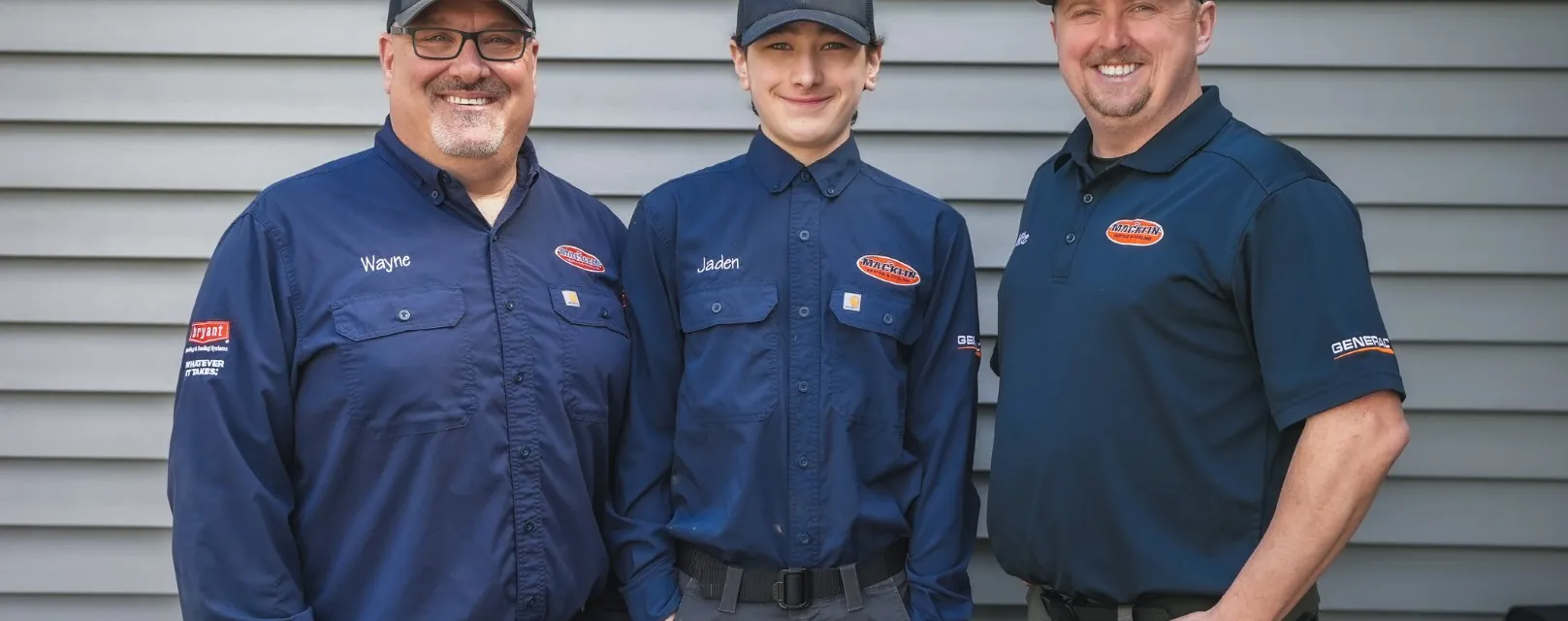
That is why HVAC technicians are always in demand. If you like working with your hands and solving problems, this career could be a great fit. In this guide, you will learn how to become an HVAC technician, step by step. The team at Macklin Heating and Cooling has served Genesee County since 2010, and we know what it takes to succeed in this trade.
What Does an HVAC Technician Do?
An HVAC technician installs, fixes, and maintains heating and cooling systems. HVAC stands for heating, ventilation, and air conditioning.
When a furnace stops on a cold night, the technician is the person who fixes it.
Daily Responsibilities of an HVAC Technician
A normal day can include many different tasks:
- Testing furnaces, air conditioners, and heat pumps
- Cleaning and replacing filters, coils, and ducts
- Checking refrigerant levels and fixing leaks
- Installing new systems in homes and businesses
- Talking with customers about their heating and cooling problems
At Macklin Heating and Cooling, our technicians handle everything from air duct cleaning to AC installation & repair calls across Genesee County.
Where HVAC Technicians Work (Residential vs. Commercial)
Some technicians work only in homes. These workers are called an hvac residential service technician. Others work in big buildings like offices and schools. This is commercial hvac technician work. Many technicians start in homes and move into commercial work later. A residential technician may also install indoor air quality products, like humidifiers and air purification systems.
Skill is Needed to Succeed as an HVAC Technician
You need more than tools to do this job well. Good technicians have:
- Strong problem-solving skills
- Careful attention to detail
- Good customer service
- Basic math and reading skills
- Physical stamina (you will lift, bend, and climb)
- A driver’s license (you will drive to job sites)
Why Choose a Career as an HVAC Technician?
- Strong Job Demand and Job Security: Every home and building in Michigan needs heating and cooling. Systems break, systems get old, and new buildings go up. This means steady work for skilled technicians, and the work cannot be done by computers or shipped overseas.
- Competitive Salary and Earning Potential: HVAC technicians earn good money. Pay grows fast as you gain skills, and many experienced technicians earn $60,000 to $75,000 per year or more.
- No Four-Year Degree Required: You do not need a college degree or student debt to become hvac technician. Most of your training happens in trade school or through paid on-the-job learning - you earn while you learn.
How to Become an HVAC Technician: Step-by-Step
Here are the six main steps for how to get into hvac.
Step 1 — Earn Your High School Diploma or GED
You need a high school diploma or a GED to start. Math, science, and shop classes help most, since you will read manuals and take measurements on the job.
Step 2 — Complete an HVAC Training Program or Apprenticeship
Next, enroll in an hvac technician program at a trade school or community college. You will learn about electrical systems, refrigeration, airflow, and safety.
Programs usually last six months to two years.
Another option is an apprenticeship, where you work full time under experienced technicians while taking classes - and earn a paycheck the whole time.
Step 3 — Get Hands-On Experience Through On-the-Job Training
Classroom learning is only half of it. Real skill comes from working on real systems.
New technicians start as helpers, carrying equipment and watching experienced techs before taking on bigger tasks.
This is where you learn how systems really work in the field, just like the team at Macklin Heating and Cooling has done across Genesee County for over sixty combined years.
Step 4 — Earn EPA Section 608 Certification
Federal law requires this certification before you can handle refrigerants, the chemicals inside cooling systems. Most technicians only need the first two parts of the test for residential work, and study guides are free online.
Step 5 — Obtain Your State License (Michigan Requirements)
In Michigan, HVAC work must be done under a licensed mechanical contractor.
Many technicians work for a licensed company first, then take the state exam later to become a licensed contractor themselves, an important step if you ever want to run your own business.
Step 6 — Pursue Additional Certifications (NATE, HVAC Excellence)
Extra certifications help you stand out. NATE (North American Technician Excellence) is the most respected name in the industry, and certifications in areas like heat pumps can raise your pay as more homeowners choose energy-efficient options.
How Long Does It Take to Become an HVAC Technician?
The answer depends on the path you choose.
Trade School Route (6 Months – 2 Years)
A trade school program takes six months to two years. After that, you start earning as an entry-level technician while you build experience.
Apprenticeship Route (3–5 Years)
An apprenticeship takes longer - usually three to five years. But you earn a full paycheck the whole time and finish with deep, hands-on experience that employers value.
HVAC Technician Salary Expectations in Michigan
Entry-Level HVAC Technician Pay
New technicians in Michigan usually earn between $35,000 and $45,000 per year. Pay rises quickly once you have a year or two of experience and your certifications.
Experienced and Specialized Technician Pay
Technicians with five or more years of experience often earn $60,000 to $75,000 or more. Specialists, like those trained in mini split installation or commercial systems, can earn even more, with overtime adding extra income.
Tips for Landing Your First HVAC Technician Job
- Build a Strong Resume Highlighting Certifications: List your EPA 608 certification, training programs, and hands-on experience. Even helper work shows employers you are serious.
- Network With Local HVAC Companies: Visit local companies in person. Many trade jobs are filled by word of mouth before they are ever posted online. Family-owned companies like Macklin Heating and Cooling value dependable people who want to learn the trade the right way.
- Consider Starting as an HVAC Helper or Installer Assistant: Do not turn down a helper position - it is the most common way into the field. You will learn the daily rhythm of the job, from furnace installation & repair calls to routine maintenance visits, and prove you are ready for more.
Start Your HVAC Career With the Right Training and Mindset
Learning how to become a heating and air conditioning technician takes commitment.
Show up on time, ask questions, and treat every service call like it matters - because to the family with no heat in January, it does. That standard of care is what we practice every day at Macklin Heating and Cooling, where we treat every customer like family.
FAQ
Do I need a college degree to become an HVAC technician?
No. You only need a high school diploma or GED, then you learn the trade through a training program or an apprenticeship.
Is Becoming an HVAC Technician Hard?
The work can be physical, and there is a lot to learn. But training breaks it down into simple steps, and most people who like hands-on work find it very rewarding.
How Much Does HVAC Training Cost?
Trade school programs often cost between $1,500 and $15,000 depending on length. Apprenticeships cost little or nothing because you earn while you learn.
What Certifications Do HVAC Technicians Need in Michigan?
You need EPA Section 608 certification to handle refrigerants. In Michigan, HVAC work must be done under a licensed mechanical contractor.
Many techs later take the state exam to get that license themselves.
Is HVAC a Good Career in 2026?
Yes. Demand for skilled technicians stays strong because every building needs heating and cooling. Good pay, job security, and no college debt make it a smart choice.
Need help?
Now you know how to become an HVAC technician: finish high school, complete a training program, get certified, and gain real-world experience.
Within a few years, you can build a stable, well-paying career in a trade that truly helps people. And when Michigan homeowners need dependable heating and cooling, they Contact Macklin Heating & Cooling. - the family-owned team serving Genesee County with licensed, certified technicians since 2010.
Need heating or cooling service?
Request service online or call our team for installation, repair, and maintenance.
Request service