
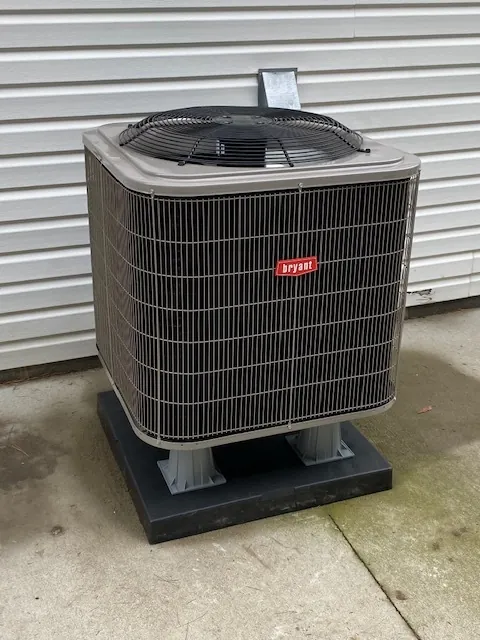
On a humid Michigan summer day, your air conditioner pulls a surprising amount of water out of your indoor air — sometimes gallons per day. Most of the time, that moisture quietly drains away and you never think about it. But when you spot condensation on your AC unit or water where it shouldn’t be, it’s worth knowing whether you’re seeing normal operation or the start of a problem.
At Macklin Heating and Cooling, we help homeowners across Genesee County sort out condensation issues every summer. Here’s a practical guide to what’s normal, what isn’t, and what to do about it.
How Much Condensation From AC Is Normal?
Quite a lot, honestly. Air conditioning works partly by dehumidifying — warm indoor air passes over cold evaporator coils, moisture in the air condenses into water, and that water collects in a drain pan and flows out through the condensate line. On a hot, humid day, a central AC system can pull several gallons of water from the air in a single day.
So yes — seeing water drip from the outdoor condensate line while your AC runs is completely normal. It’s a sign your system is dehumidifying the way it should.
Condensation on AC Unit Outside
The outdoor unit handles hot refrigerant, so it behaves differently than the indoor side. A little condensation on the refrigerant line’s insulation on a humid day is normal. What’s not normal:
- Frost or ice on the refrigerant lines or the outdoor coil — this points to restricted airflow, low refrigerant, or a failing component.
- Water pooling around the outdoor unit in large amounts, which can indicate a drainage problem.
- Ice on the indoor evaporator coil — the coil gets cold enough that condensation freezes instead of dripping into the pan.
Ice anywhere on the system is your signal to turn the AC off and let it thaw completely before running it again — and to schedule a service call, because frozen coils don’t fix themselves.
Condensation on AC Unit Inside
Inside, the picture is different. Your indoor unit is designed to manage condensation — but only when everything works. Problems show up as:
- A full or overflowing drain pan. The condensate line clogs with algae and sludge over time, water backs up, and the pan overflows — potentially damaging ceilings, walls, and flooring.
- Water around the air handler. Loose drain fittings, a cracked pan, or a frozen-then-thawing coil can all cause leaks.
- Musty smells. Standing water in a pan or line breeds mold, which is why condensation problems and musty AC smells often arrive together.
A float switch on the drain pan protects many newer systems by shutting the AC off before water overflows. If your system keeps shutting down for no obvious reason, a full drain pan may be the reason.
Condensation on HVAC Ducts
Water on the outside of your ductwork is a different issue entirely — and a common one in Michigan. It happens when warm, humid air touches the cold surface of the ducts. This is called “sweating,” and it usually means one of three things:
- Missing or damaged insulation on ducts, especially in attics, crawl spaces, and basements.
- Too much humidity in the space where the ducts run — common in Michigan basements all summer.
- Air leaks in the ducts. Warm air escaping through gaps meets cold duct surfaces and condenses.
Sweating ducts are more than a nuisance. Persistent moisture feeds mold, damages insulation, and can rust metal ductwork over time.
How to Stop Condensation on Air Ducts and Vents
Here are the fixes that actually work, roughly in order of effort:
- Reduce indoor humidity. Keep your home around 30 to 50% relative humidity. Your AC does part of this; a dehumidifier in damp basements does the rest.
- Insulate exposed ducts. Add or repair insulation wrap on any duct running through attics, crawl spaces, or unfinished basements.
- Seal duct leaks. Sealing gaps and joints with proper mastic or tape keeps humid air away from cold surfaces and improves efficiency at the same time.
- Check supply vents in humid rooms. Vents in bathrooms or kitchens can sweat if those rooms hold excess moisture — run exhaust fans when cooking and showering.
- Keep the condensate line clean. An annual flush prevents the clogs that cause most indoor water problems.
If sweating persists after these fixes, the underlying cause may be duct design or airflow balance — which is a job for a professional assessment. Our A/C installation and repair team handles exactly this kind of diagnostic work.
FAQ
Is it normal for AC pipes to sweat?
A light amount of moisture on uninsulated refrigerant lines during very humid weather can happen, but it shouldn’t be constant or heavy. Properly insulated lines shouldn’t sweat at all — if yours do, the insulation needs attention.
Why is my AC vent dripping water?
Usually because humid air is hitting the cold vent or duct around it. Check for missing insulation, duct leaks near the vent, or excess humidity in that room. It can also mean a clogged condensate drain pushing water back through the system.
Can condensation damage my AC or home?
Yes. Overflowing drain pans damage ceilings, drywall, and flooring. Sweating ducts breed mold and rust metal over time. And ice from condensation-related problems strains the compressor. Small moisture issues get expensive fast if they’re ignored.
How often should I clean my AC condensate drain?
Once a year is a good baseline, and it’s typically part of a professional tune-up. If your system runs heavily through humid stretches, more frequent checks don’t hurt.
Need help?
Some condensation is your AC doing its job — gallons of water a day is normal. The problems start when that water shows up in the wrong places: ice on the coils, water around the indoor unit, or sweat on your ductwork. Caught early, these are simple, affordable fixes.
If you’ve got condensation where it shouldn’t be, Macklin Heating and Cooling can find the cause and fix it properly. As a family-owned company serving Genesee County and surrounding communities since 2010, we diagnose the real problem — not just the symptom — and we treat your home like our own.
Call us or Request service online — we’re happy to help.
Need heating or cooling service?
Request service online or call our team for installation, repair, and maintenance.
Request service