
If you are looking to upgrade your home’s cooling system or add air conditioning to a space that has never had it, you have probably come across two main options: a traditional central air conditioning system or a ductless mini-split system.
Both can keep your Michigan home comfortable during those hot, humid summer months, but they work very differently and each has distinct advantages depending on your situation.
At Macklin Heating and Cooling, we install both central AC and ductless mini-split systems throughout Genesee County, and we are often asked which option is better. The honest answer is that it depends on your home, your budget, your comfort goals, and whether you already have ductwork in place. In this guide, we will break down how each system works, compare the pros and cons, and help you figure out which solution makes the most sense for your specific needs.
How Central Air Conditioning Works
Central air conditioning is the system most Michigan homeowners are familiar with. It uses a network of ducts to distribute cooled air from a single indoor evaporator coil and blower unit throughout your entire home. The heat removed from your indoor air is transferred outside via a condenser unit, typically located next to your house. If you already have a forced-air furnace, your existing ductwork can usually be used for central air conditioning as well.
Central AC excels at cooling entire homes evenly. When sized and installed correctly by a licensed HVAC contractor, a central system can maintain consistent temperatures across every room, which is ideal for families who want whole-home comfort with a single thermostat controlling everything. Modern central air conditioners also offer impressive energy efficiency ratings, with many units achieving SEER ratings of 16 or higher, which can translate to meaningful savings on your summer energy bills.
How Ductless Mini-Split Systems Work
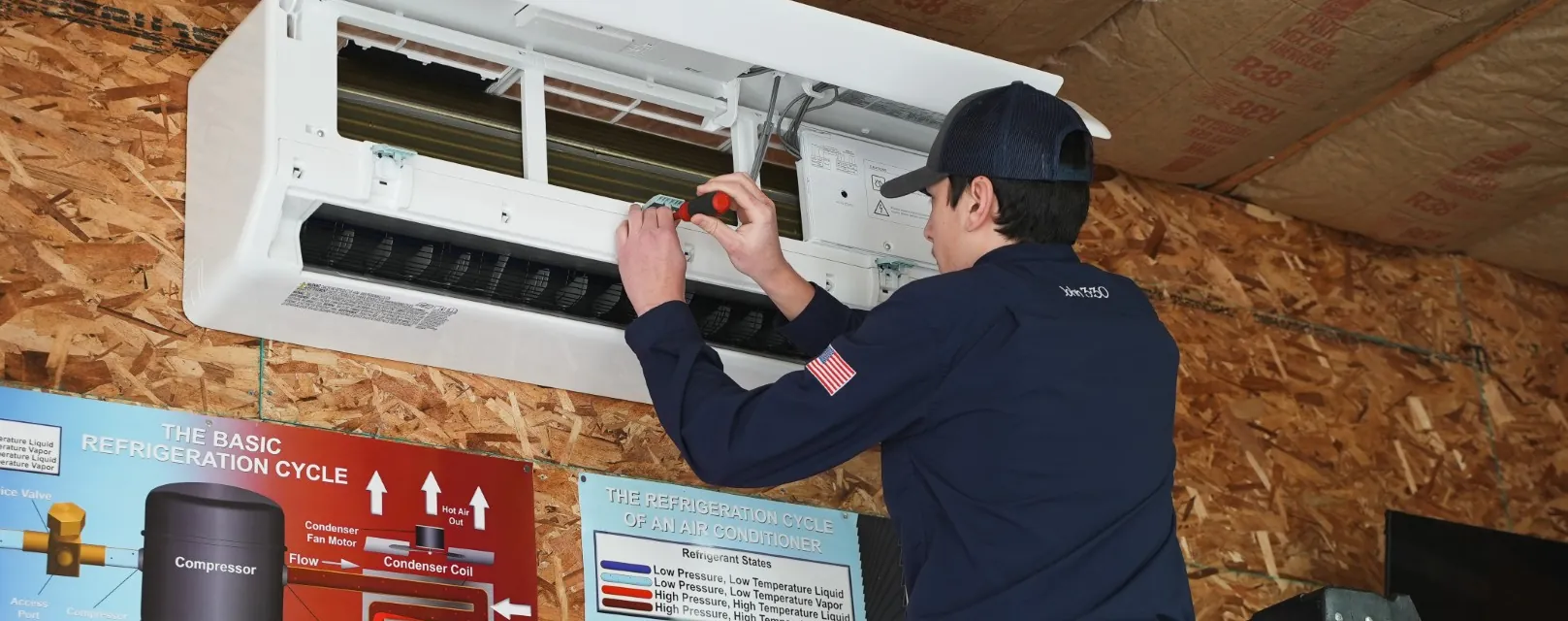
Ductless mini-split systems, sometimes just called mini-splits, take a fundamentally different approach. Instead of using ductwork to move air, a mini-split system places individual air-handling units, called heads, directly in the rooms or zones you want to cool. Each head connects to an outdoor condenser unit via a small conduit that carries refrigerant, power, and drainage. Because no ductwork is needed, mini-splits can be installed in virtually any space.
One outdoor unit can typically support up to eight indoor heads, allowing you to cool multiple rooms or zones independently. This zoned approach means you can keep the living room at 72 degrees while letting an unused guest room stay at 78, saving energy without sacrificing comfort in the spaces you actually use. For Michigan homeowners with older homes that lack ductwork, room additions, finished basements, garages converted to workshops, or sunrooms that never seem to stay comfortable, ductless mini-split installation is often the perfect solution.
Comparing Installation Requirements
If your home already has ductwork from a forced-air furnace, installing central air conditioning is typically straightforward. Your HVAC technician will need to add an indoor evaporator coil to your furnace, run refrigerant lines to an outdoor condenser, and make some electrical connections. The process usually takes one to two days, and the bulk of the work happens outside and in your utility area, with minimal disruption to your daily life.
Ductless mini-split installation is also relatively quick, usually completed in one day for a single-zone system or two days for a multi-zone setup. The indoor heads mount on walls or ceilings, and the conduit connecting them to the outdoor unit requires only a small three-inch hole drilled through the exterior wall. There is no need to tear into walls, ceilings, or floors to install ductwork, which makes mini-splits especially appealing for historic homes in areas like Flint and Fenton where preserving original architecture matters.
However, if your home does not have ductwork and you want whole-house cooling, a central air system will require duct installation, which is a much larger project involving significant construction. In that scenario, a multi-zone ductless system may actually be the less invasive and more cost-effective option.
Energy Efficiency and Operating Costs
When it comes to energy efficiency, ductless mini-splits have a clear advantage. Because they deliver cooled air directly to each room without traveling through ductwork, they avoid the energy losses associated with leaky or poorly insulated ducts. The Department of Energy estimates that duct losses can account for more than 30 percent of energy consumption for space conditioning, especially if the ducts are in an unconditioned attic or crawl space.
Additionally, mini-splits use inverter-driven compressors that adjust speed based on demand rather than cycling on and off like traditional central AC units. This variable-speed operation is significantly more efficient and provides more consistent temperatures with less temperature swing. Many ductless systems achieve SEER ratings in the 20 to 30 range, which is substantially higher than even the most efficient central air conditioners.
That said, a well-maintained central air system with sealed and insulated ductwork can still operate efficiently, and the upfront cost of central AC installation is typically lower if you already have ducts in place. The right choice depends on your home’s specific circumstances and your long-term energy goals.
Comfort and Customization
This is where ductless mini-splits really shine for many homeowners. Zoned cooling means personalized comfort for every room. If one family member likes it cooler for sleeping while another prefers a warmer bedroom, a multi-zone mini-split lets each person set their ideal temperature. No more thermostat wars, no more closing vents and hoping for the best.
Mini-splits also operate more quietly than central air systems. The indoor heads produce whisper-quiet airflow, and because the compressor sits outside, you will barely notice the system is running. For home offices, bedrooms, and media rooms where noise matters, this is a significant advantage.
Central air, on the other hand, offers simplicity. One system, one thermostat, consistent temperatures throughout. For homeowners who value straightforward operation and do not need room-by-room customization, central AC remains an excellent choice.
Macklin Heating and Cooling Can Help You Decide
Choosing between a ductless mini-split and central air conditioning is a decision that deserves careful consideration. At Macklin Heating and Cooling, we take the time to understand your home, your comfort preferences, and your budget before making any recommendation. Our licensed technicians will evaluate your existing system, your home’s layout, insulation levels, sun exposure, and other factors that affect cooling performance.
We install both central air conditioning systems and ductless mini-splits from trusted manufacturers, and we stand behind every installation with our satisfaction guarantee. Whether you need a single-room solution for a converted garage or a whole-home cooling system for your new construction in Grand Blanc or Davison, we have the expertise to get it done right.
Call Macklin Heating and Cooling at (810) 714-9500 to schedule your free in-home consultation. We will walk you through your options, answer all your questions, and provide a detailed estimate with no pressure and no obligation. You can also learn more about our cooling services at www.mackheat.com.
Need heating or cooling service?
Request service online or call our team for installation, repair, and maintenance.
Request service